What Is a Daycare?

When you as a parent are looking for the right daycare for your child, it's important to understand what a daycare is and what options are available. In Denmark, childcare institutions are a central part of many families' everyday life, and they play a crucial role in children's upbringing and development.
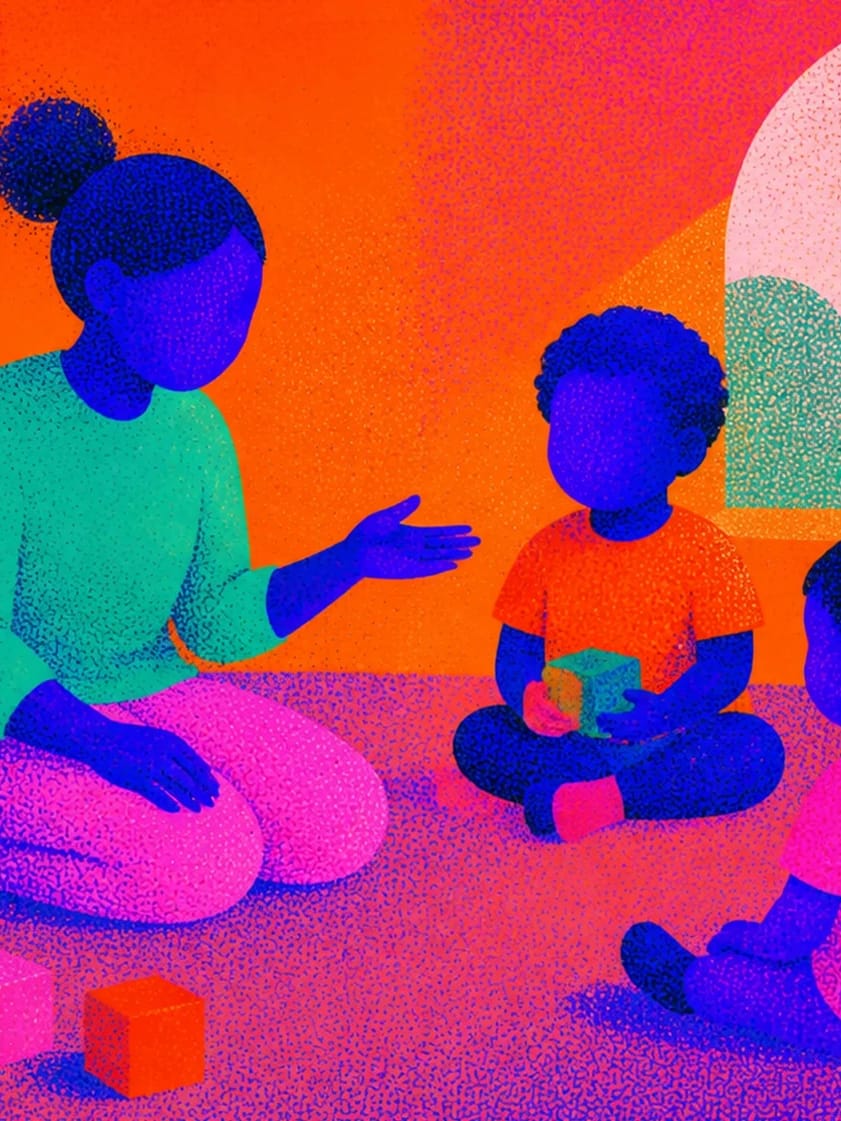
A daycare (vuggestue) is an institution that offers professional care for children aged 0 to 3 years. Here, a safe and stimulating environment is created where the youngest can develop through play, learning, and social interaction. Daycares are an integrated part of the Danish childcare system and are found throughout the country.
A daycare is much more than just a place where children are looked after while parents are at work. It's where children get the opportunity to explore, learn, and develop in safe surroundings. When you choose a daycare, you choose a place where the child's well-being and development are at the center, and where professional staff work to create the best framework for the youngest.
The Different Types of Daycares in Denmark
When it comes to caring for the youngest, there are several options to choose from in Denmark. Daycares exist in different forms, each offering unique pedagogical approaches and settings. Choosing the right type of daycare can make a big difference for both children and parents. Here is an overview of the different types of daycares found in Denmark.
Municipal daycares are the most common and are operated by the municipality. These daycares follow the municipality's guidelines and pedagogical principles.
Private daycares are operated by private organizations or associations. These can have more flexible pedagogical approaches and often a specific profile or set of values.
Self-governing daycares are independent institutions operated by boards consisting of parents and other stakeholders. They receive municipal support but have greater freedom to adapt their pedagogy.
Integrated daycare institution An integrated daycare institution offers care for both nursery children (0-3 years) and kindergarten children (3-6 years). Instead of having separate departments for each age group, as seen in some municipalities, an integrated daycare institution is a unified unit where children from both age groups can be in the same building, but are often divided into different rooms or groups based on age. This type of institution has the advantage of creating continuity in children's everyday life, as they don't have to change institutions when they go from nursery to kindergarten age. It can also be an advantage for siblings, who can be in the same institution even if they are in different age groups.
A profile daycare institution is a type of daycare institution that has a specific pedagogical direction or focus area. These institutions differ from regular daycare institutions by having a clear profile that guides their daily practice and arrangement of the learning environment. This can be, for example, nature, sports, music, art, or a specific pedagogical approach such as Marte Meo. The purpose of a profile daycare institution is to offer children a special learning environment that is tailored to promote specific competencies and interests.