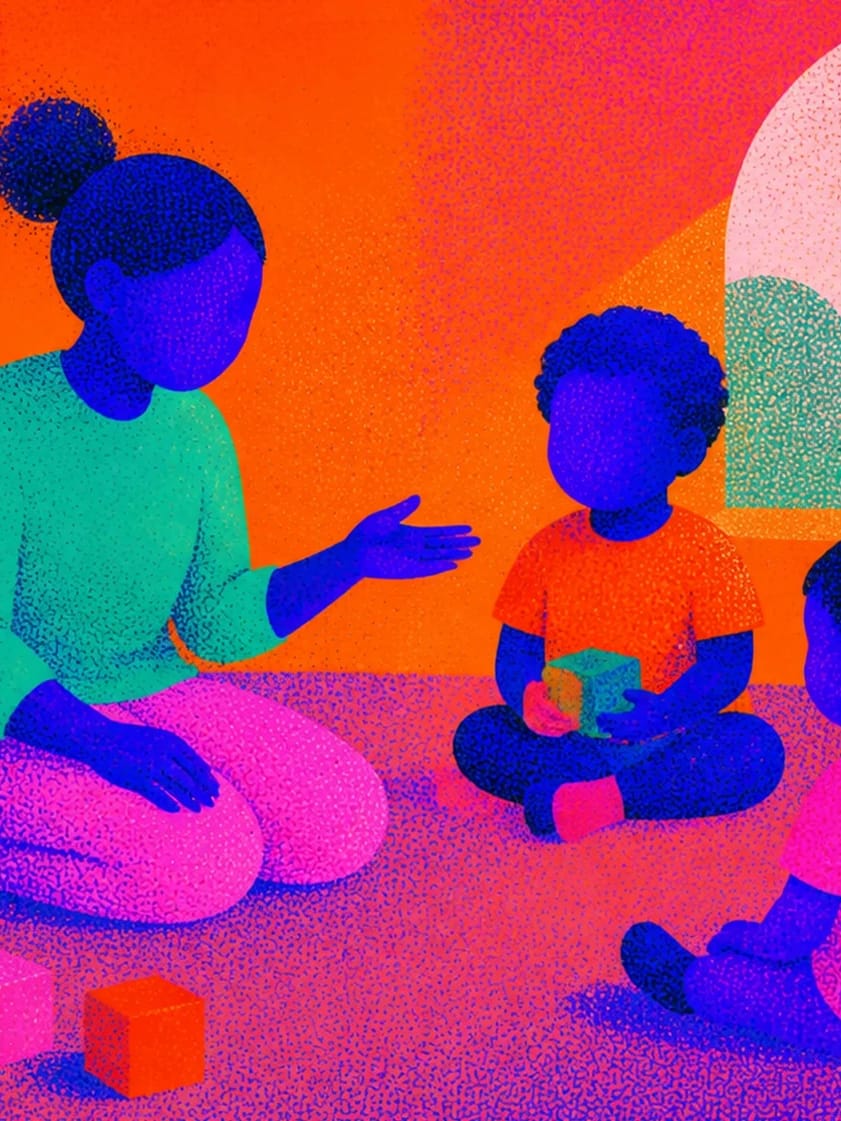
Why Does My Child Cry at Drop-off?

When Children Cry at Daycare Drop-off
It's very common for children to cry at daycare drop-off – especially in the beginning, or when there are changes in the child's everyday life. The crying is often an expression of separation and uncertainty when parents leave, but it doesn't necessarily mean that the child is unhappy for the rest of the day. For many children, the crying stops shortly after drop-off when they become absorbed in play and relationships.
Why Do Children React with Crying?
When the child is dropped off, several things can play a role. Many children are strongly attached to their parents, and the separation can therefore feel overwhelming. The crying becomes a way to show that the child would rather stay with mom or dad.
The shift from the calm and familiar surroundings of home to the livelier environment of daycare with many children and adults can also be demanding – especially for children who are still getting used to the place. At the same time, children continuously go through developmental phases where they can be more emotionally vulnerable and therefore react more strongly at drop-off.
What Can You Do as a Parent?
As a parent, you play an important role in the drop-off situation. By staying calm and radiating security, you show the child that it's a safe place to be. Children mirror their parents, and your calm can help the child settle down faster.
It can also be a good idea to keep the goodbye session short. Although it may feel difficult, long and repeated goodbyes can intensify the child's discomfort. A loving, clear goodbye – where you tell them you'll come back – gives the child a clear framework. It's usually best not to return multiple times, as it can create confusion and prolong the separation.
At the same time, it's important to acknowledge the child's feelings. You can put words to the child's experience, without trying to remove the feeling, for example by saying: "I can see you're getting sad now. I'll come back later, and you'll have a good day." That way, the child learns that feelings are okay and can be held.
Security Through Routines and Collaboration
Predictability creates security. When drop-off happens in roughly the same way every day, the child gradually learns that parents always come back. Some children also benefit from a transitional object, like a teddy bear or a small item from home, that can provide extra security throughout the day.
Good collaboration with the daycare staff is also important. Talk to them about how drop-off is experienced, and how the child is doing after you've left. Many parents find that staff can tell them that the crying quickly subsides, and that the child finds their way into play shortly after.
Crying at drop-off is usually a natural part of the child's development and attachment. With calm, recognizable routines, and close collaboration between home and daycare, drop-off can become easier over time – both for the child and the parents.